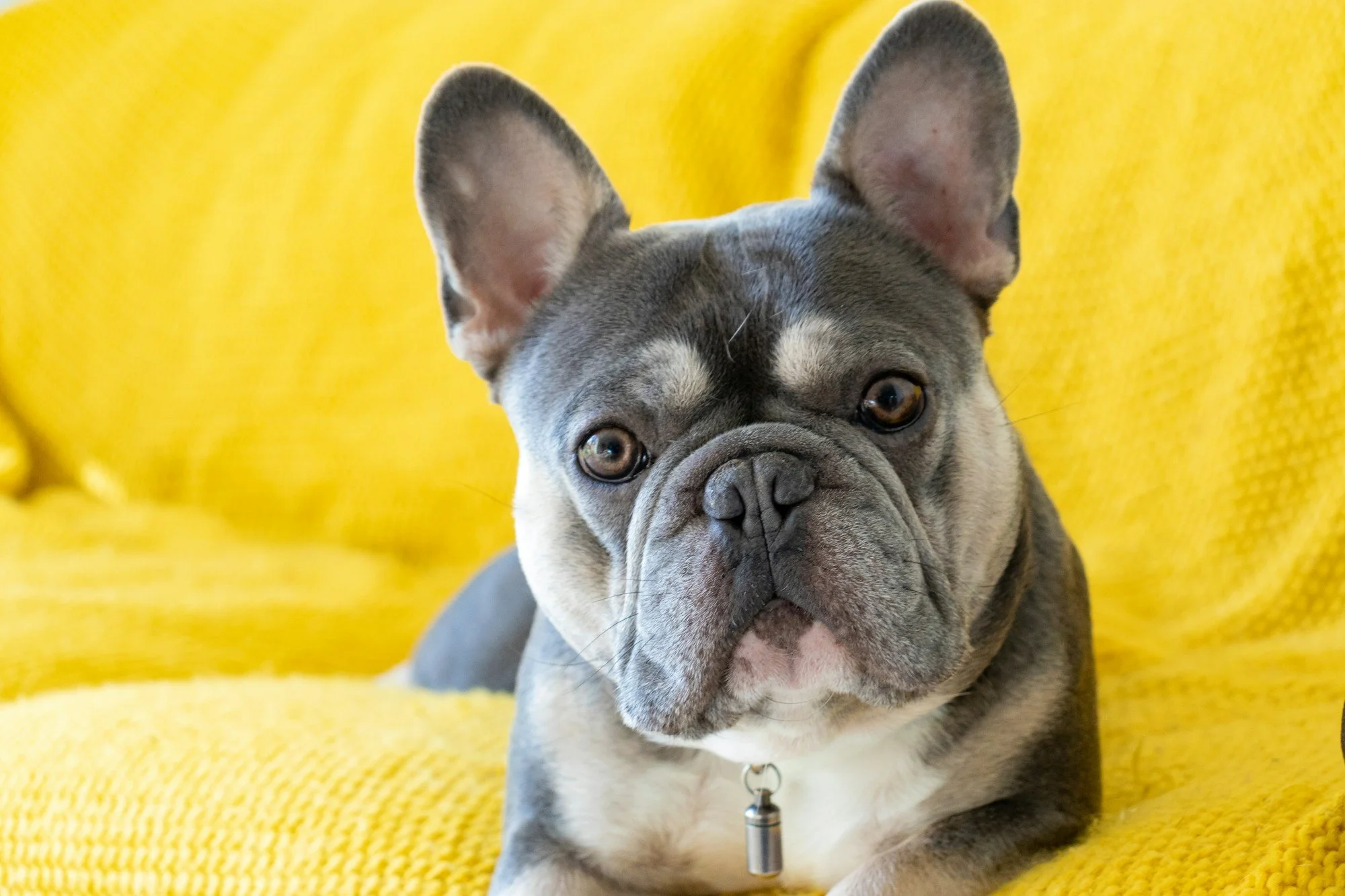
Every French Bulldog coat color comes from a handful of genes inherited from the dam and the sire.
Lilac, Isabella, New Shade, Rojo — French Bulldog color names can sound like a paint swatch catalog. But every one of them comes from a specific combination of genes a puppy inherits from its dam and sire. In this guide, we break down what each color really means, how colors are passed down, and why — at North Carolina Frenchies — a puppy's color is always the last thing we consider, never the first.
Why French Bulldogs Come in So Many Colors
Every Frenchie's coat is the result of a handful of genes, and each gene is inherited as a pair: one copy from the dam and one from the sire. Some genes decide the base pigment, some lighten (dilute) it, and others add a pattern on top. Many of today's popular colors are recessive, which means a puppy only shows the color when it inherits two copies. That is why two parents can produce a color that neither of them shows.
When you see a breeder list a "DNA string" like d/d co/co at/at, they are simply telling you which copies of each gene the dog carries. Here are the genes that matter most:
The Genes Behind French Bulldog Colors
D locus (dilute) — two copies (d/d) soften black pigment to Blue.
Cocoa (co) — two copies (co/co) turn black pigment into a rich chocolate brown, the most common "Chocolate" in Frenchies.
B locus ("testable chocolate") — two copies (b/b) create a different, warmer brown often called Rojo.
E locus — two copies of e (e/e) produce Cream, which can hide most other color genes.
A locus — at/at or at/a creates tan points on the eyebrows, muzzle, chest and legs.
S locus — produces Pied: a white coat with patches of color.
M locus — produces Merle, a marbled pattern (more on this below).
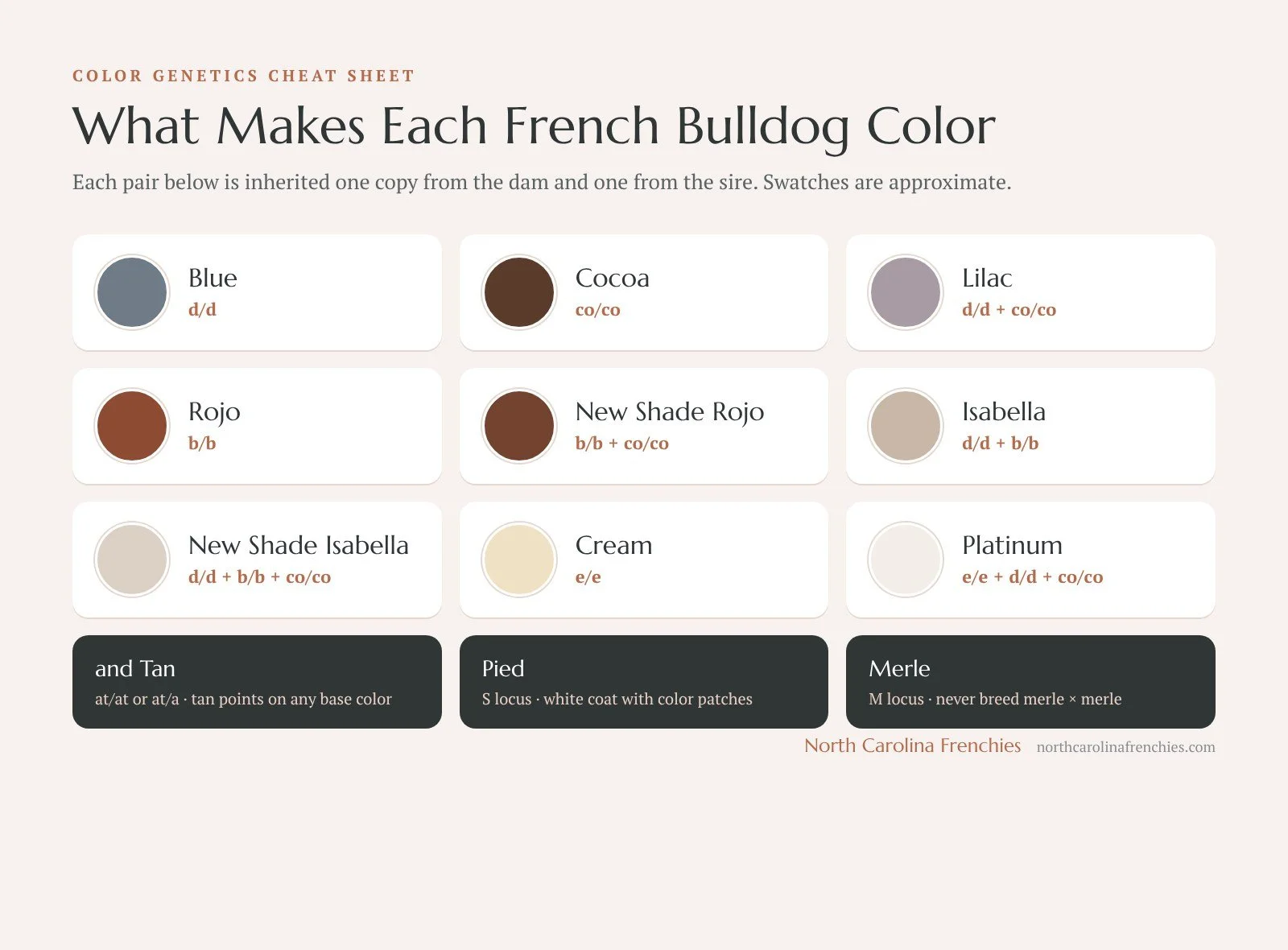
Our quick-reference chart: the gene combinations behind today's most popular French Bulldog colors.
French Bulldog Color Guide: What Each Name Means
Blue (d/d)
Blue is the dilute version of black. Two copies of the dilute gene turn a black coat into a steel-gray to slate-blue color, usually with gray-blue eyes as a puppy.
Chocolate or Cocoa (co/co)
Two copies of the cocoa gene turn black pigment into a deep chocolate brown. Cocoa is the most common source of brown coats in the breed and the foundation of several "designer" colors below.
Lilac (d/d + co/co)
Lilac is dilute plus cocoa. Together they soften chocolate into the silvery, lavender-toned coat Lilac Frenchies are known for. A common misconception is that Lilac comes from Blue plus testable chocolate (b/b) — in French Bulldogs, Lilac usually refers to dilute plus cocoa.
Rojo (b/b)
Rojo comes from two copies of "testable chocolate" at the B locus. It produces a warm, reddish-brown coat, often with lighter eyes and a brown nose.
New Shade Rojo (b/b + co/co)
Add cocoa on top of Rojo and you get New Shade Rojo, a rich brown that carries both forms of chocolate.
Isabella (d/d + b/b)
Isabella is dilute plus testable chocolate. The result is a pale, champagne-silver coat.
New Shade Isabella (d/d + b/b + co/co)
New Shade Isabella carries dilute, testable chocolate and cocoa, three recessive pairs at once, which makes it one of the lightest and least common dilute colors.
Cream (e/e)
Cream Frenchies have a solid, warm-white coat. Because the e/e combination masks most other color genes, a Cream dog can secretly carry Blue, Cocoa or Chocolate — which is why DNA testing matters.
Platinum
Platinum describes a Cream dog that also carries Lilac genes (e/e with d/d and co/co), giving a very pale coat with lighter skin and nose.
Fawn and Brindle
These are the breed's traditional colors. Fawn ranges from light tan to deep red, and Brindle adds dark striping over the base coat. Both can combine with the dilute and chocolate genes above, giving names like "Blue Fawn" or "Lilac Brindle."
"and Tan" (at/at or at/a)
Tan points are the crisp tan markings on the eyebrows, muzzle, chest and legs. They show when a dog carries two copies of the tan-point gene (at/at) or one copy paired with recessive black (at/a), and they can appear on almost any base color. A Lilac and Tan French Bulldog, for example, has a Lilac base coat with tan points.
Pied
Pied Frenchies are mostly white with patches of color. The pattern sits on top of the base color, so you can have a Blue Pied, a Lilac Pied and so on.
Merle
Merle creates a marbled, mottled coat. It is striking, but it comes with an important warning: breeding two Merle dogs together can produce "Double Merle" puppies with a high risk of deafness and vision problems. Responsible breeders never pair two merles.
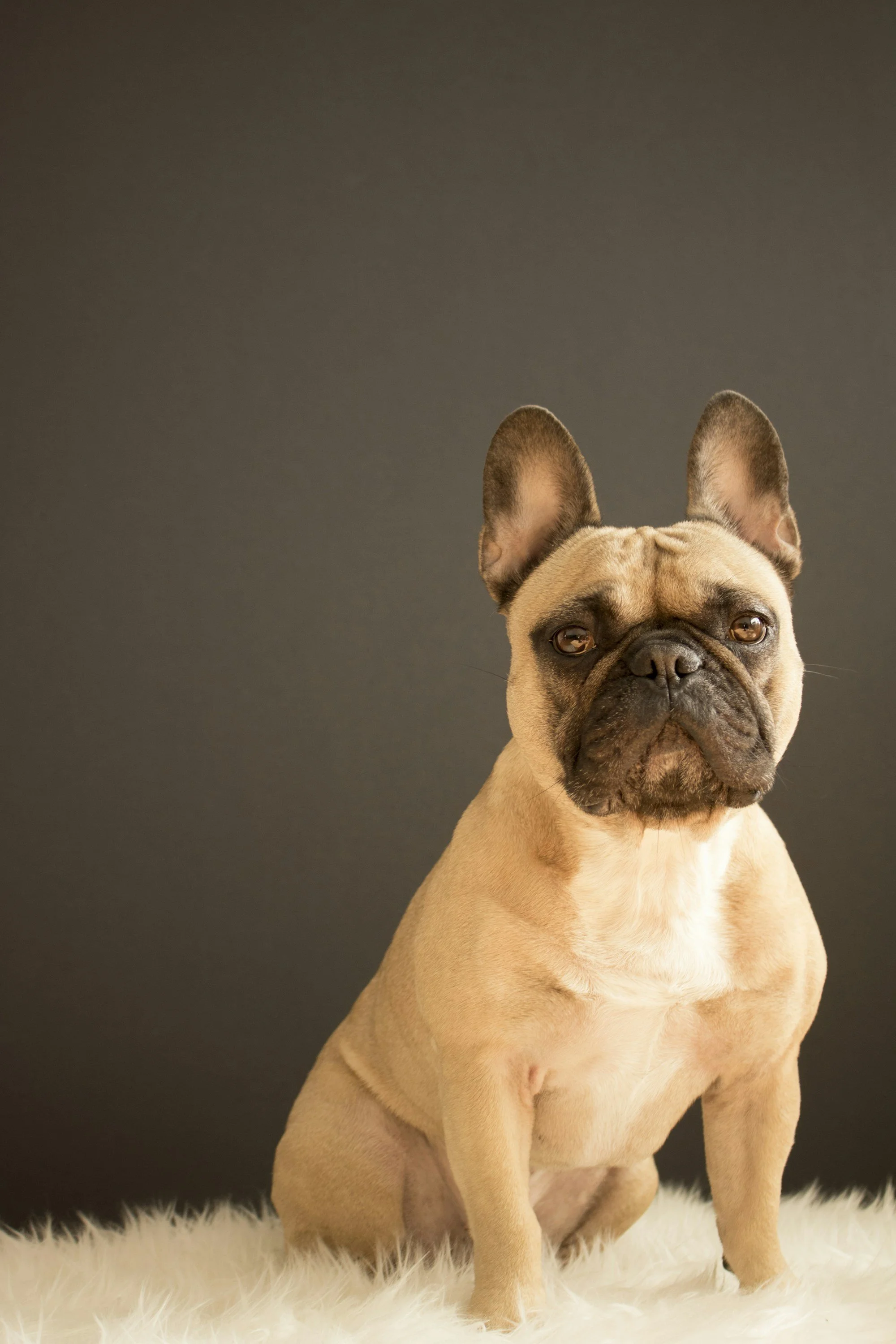
Fawn is one of the breed's traditional colors, ranging from light tan to deep red.
Does Color Affect a French Bulldog's Health?
For most colors, the coat itself does not decide how healthy a dog will be. The health of the parents and the care a puppy receives matter far more. A few points are still worth knowing:
Cocoa — a 2021 study published in the journal Genes found that Cocoa French Bulldogs had fewer platelet dense granules, but owners reported no increase in bleeding. The effect appears to be mostly limited to pigmentation.
Dilute coats — in several breeds, some dilute dogs can develop thinning hair, a condition called color dilution alopecia. Ask a breeder whether their dilute dogs have had coat problems.
Merle — as mentioned above, Merle-to-Merle pairings put puppies at real risk.
Every dam and sire at North Carolina Frenchies is OFA health tested and DNA tested, so you know exactly what your puppy can inherit — coat color and health alike. See our upcoming litters →
How to Choose a Color Without Paying for Hype
Ask for DNA results on both parents. A reputable breeder can tell you which colors a litter can and cannot produce.
Put structure, breathing and temperament first. A beautiful coat on a dog that cannot breathe comfortably is no bargain.
Expect some change. Puppy coats often lighten or deepen over the first months, and eye color can change too.
Be wary of "rare color" pricing alone. Rarity is about genetics, not quality.
Frequently Asked Questions
What Is the Rarest French Bulldog Color?
Colors that require several recessive pairs at once, such as New Shade Isabella, are among the least common because both parents must carry every one of the required genes. Remember that "rare" does not mean healthier or better.
Can Lilac and Isabella French Bulldogs Be AKC Registered?
Yes. Color does not affect whether a purebred French Bulldog can be registered. It affects whether the dog fits the traditional show-ring standard, which many of today's popular colors fall outside of.
Can Two Blue French Bulldogs Have a Lilac Puppy?
Only if both parents also carry the cocoa gene. Two Blue (d/d) parents will always produce dilute puppies, but to get Lilac each parent must pass on a copy of cocoa as well.
Do French Bulldog Puppies Change Color as They Grow?
Often, yes. Many puppies are born with blue or gray eyes that settle into their adult color within the first few months, and coats can lighten or deepen over the first year. A DNA test tells you a puppy's true color genetics from the start.
Find Your Frenchie
We love talking color genetics, but we love healthy, happy puppies even more. If you are ready to start the conversation, submit a puppy application or browse our upcoming litters. New to the breed? Read our guide to choosing a French Bulldog breeder and learn what "health tested" really means.
