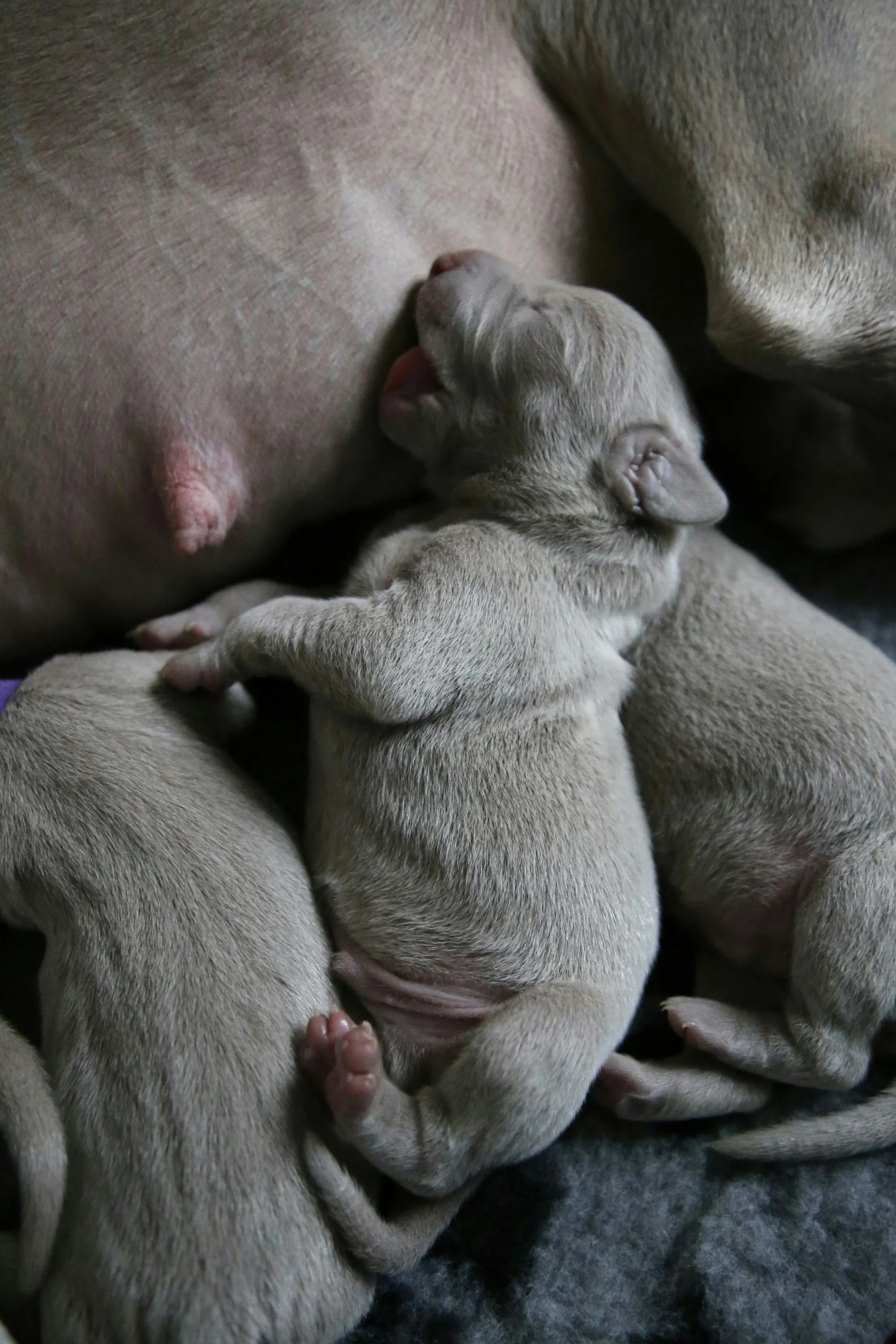
Newborn puppies nursing. A healthy litter starts months earlier, with careful timing, testing and a plan with the veterinary team.
Many new owners are surprised to learn that most French Bulldog litters are delivered by planned C-section. It is not a shortcut. It is one of the most important safety decisions a breeder makes. In this post, we explain why Frenchies so often struggle to give birth naturally, what large veterinary studies have found, and exactly how we plan every delivery at North Carolina Frenchies to keep our dams and puppies safe.
Why French Bulldogs Struggle to Give Birth Naturally
The same traits that make Frenchies so lovable make natural birth risky:
Large heads and broad shoulders. Puppies' heads are big relative to the birth canal.
A narrow pelvis. French Bulldog dams have compact, narrow hips.
A brachycephalic airway. Labor is physically demanding, and a flat-faced dog can tire quickly.
Small litters. Fewer puppies can mean each one grows larger, which makes delivery harder.
When labor stalls or a puppy becomes stuck, it is called dystocia, and it can quickly become an emergency for both the dam and her puppies.
What the Research Says
One of the largest studies on the topic, led by the Royal Veterinary College's VetCompass program and published in Veterinary Record in 2017, reviewed emergency veterinary records from about 20,000 female dogs across 50 UK clinics, and a 2019 follow-up from the same team looked at which of those dogs went on to need a C-section. The findings were striking:
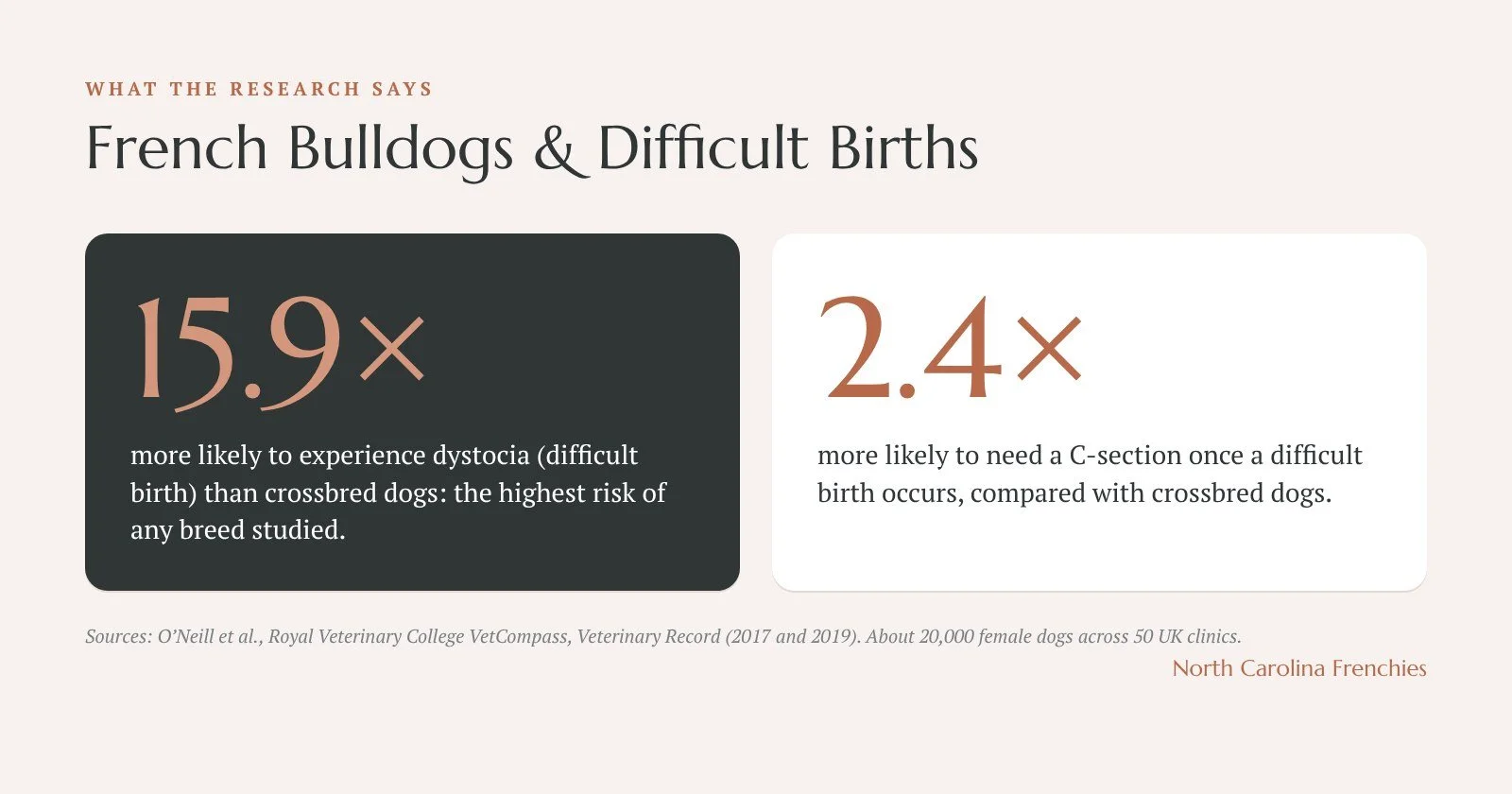
Key findings from the Royal Veterinary College VetCompass dystocia studies (Veterinary Record, 2017 and 2019).
French Bulldogs were 15.9 times more likely to experience dystocia than crossbred dogs, the highest risk of any breed studied.
Among dogs that had a difficult birth, French Bulldogs were 2.4 times more likely to need a C-section than crossbreds.
Other flat-faced and small breeds, including Boston Terriers and Pugs, also had higher risk.
Numbers like these are why experienced French Bulldog breeders and veterinarians plan for a C-section from the start rather than waiting for an emergency.
How We Plan Every Delivery
A safe delivery day is the result of months of preparation. Here is our process:
Health before breeding. Every dam and sire is OFA health tested and DNA tested, and our dams are in good body condition before they are bred.
Progesterone timing. We track progesterone throughout the heat cycle to pinpoint ovulation. That gives us an accurate due date, roughly 63 days from ovulation, instead of a guess.
Confirming pregnancy. An ultrasound around four weeks confirms the pregnancy and that puppies are developing.
Counting puppies. A late-pregnancy X-ray lets our veterinarian count the puppies, so we know exactly how many to expect on delivery day.
Watching the progesterone drop. Progesterone falls shortly before labor. When it drops below the threshold our veterinarian uses (about 2–3 ng/mL), we know the puppies are ready, and the C-section goes ahead.
Delivery day. Our veterinary team performs the C-section while assistants warm, dry and stimulate each puppy and clear its airway.
The first weeks. Puppies receive around-the-clock care: warmth, nursing and daily weigh-ins to make sure every one is thriving.
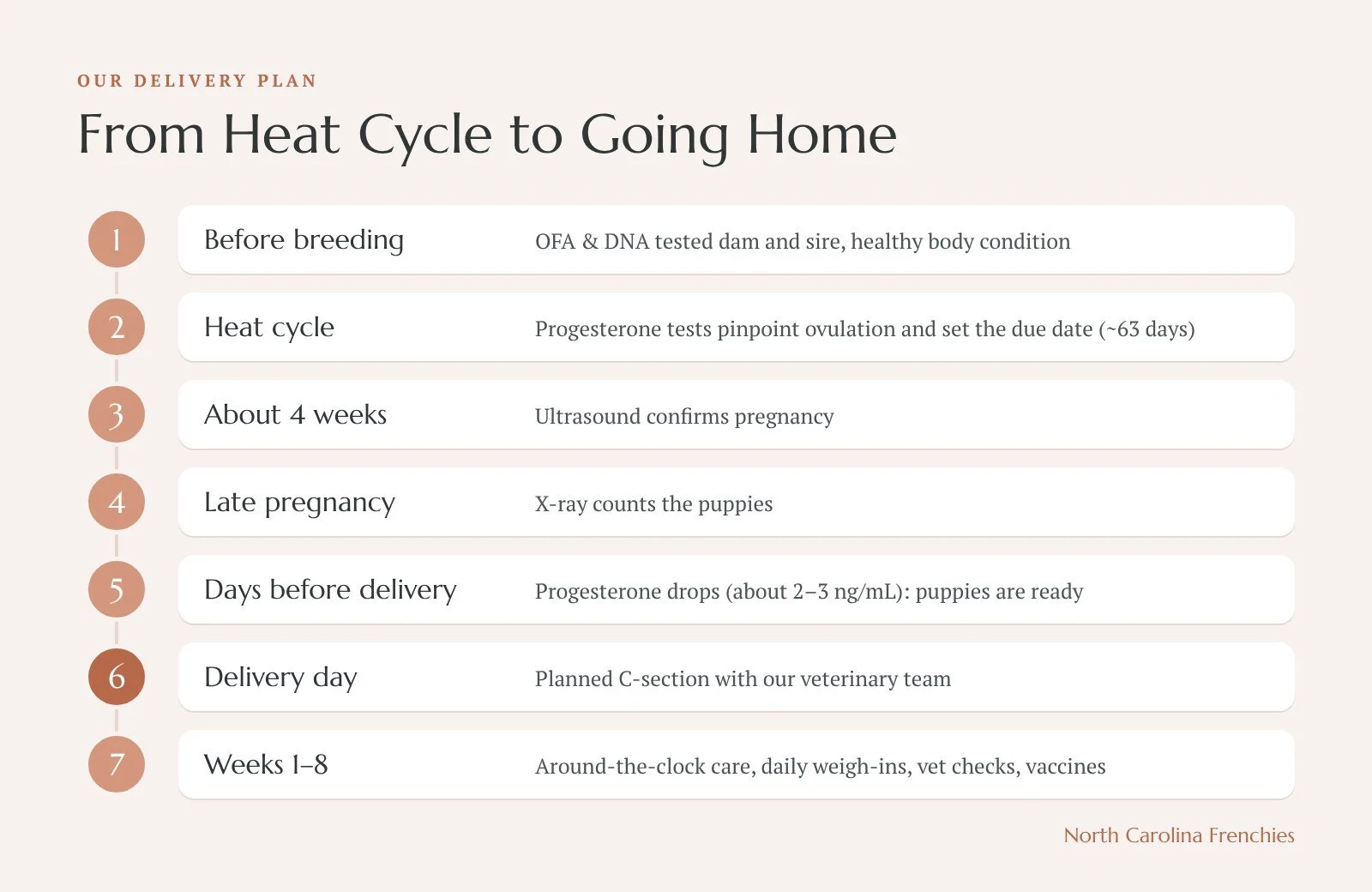
From heat cycle to newborn care: how we plan every litter.
Is a Planned C-Section Safe?
Every surgery carries some risk, and a C-section is no exception. But waiting until a dam is already in distress means surgery happens when she is exhausted and her puppies are stressed. Planning ahead lets the veterinary team choose the right timing, prepare anesthesia carefully and have extra hands ready to care for newborns. For French Bulldogs, a planned C-section is widely considered the safer path.
Our dams are family. We give them rest between litters, plan every delivery with our veterinarian, and never let a litter schedule come before their health. Learn how our program works →
What This Means for You as a Puppy Buyer
Ask about the delivery plan. A responsible breeder should be able to explain how they time breeding and deliveries.
Ask how dams are cared for. How often are they bred? Do they get rest between litters? When are they retired?
Understand why litters are small and planned. Careful planning is one reason reputable Frenchie litters are often spoken for before they are born, and why joining a waitlist early helps.
Frequently Asked Questions
Can French Bulldogs Give Birth Naturally?
Some can, but it is risky. Because French Bulldogs have such a high rate of dystocia, most experienced breeders plan a C-section with their veterinarian.
How Many Puppies Does a French Bulldog Usually Have?
French Bulldog litters are usually small, often three to five puppies, although some dams have more. A late-pregnancy X-ray gives the most accurate count.
How Many C-Sections Can a French Bulldog Safely Have?
There is no single number. It depends on the dam's health and recovery, and on veterinary guidance. Responsible breeders limit the number of litters per dam and retire dams early to protect their long-term health.
When Can Puppies Born by C-Section Go Home?
The same as any puppy: around eight weeks of age, after a veterinary health check, age-appropriate vaccinations and deworming.
Reserve a Puppy From a Carefully Planned Litter
Our litters are planned months in advance, and waitlist families always get first look. Start with a puppy application, see our upcoming litters, or read why we breed for better breathing.
