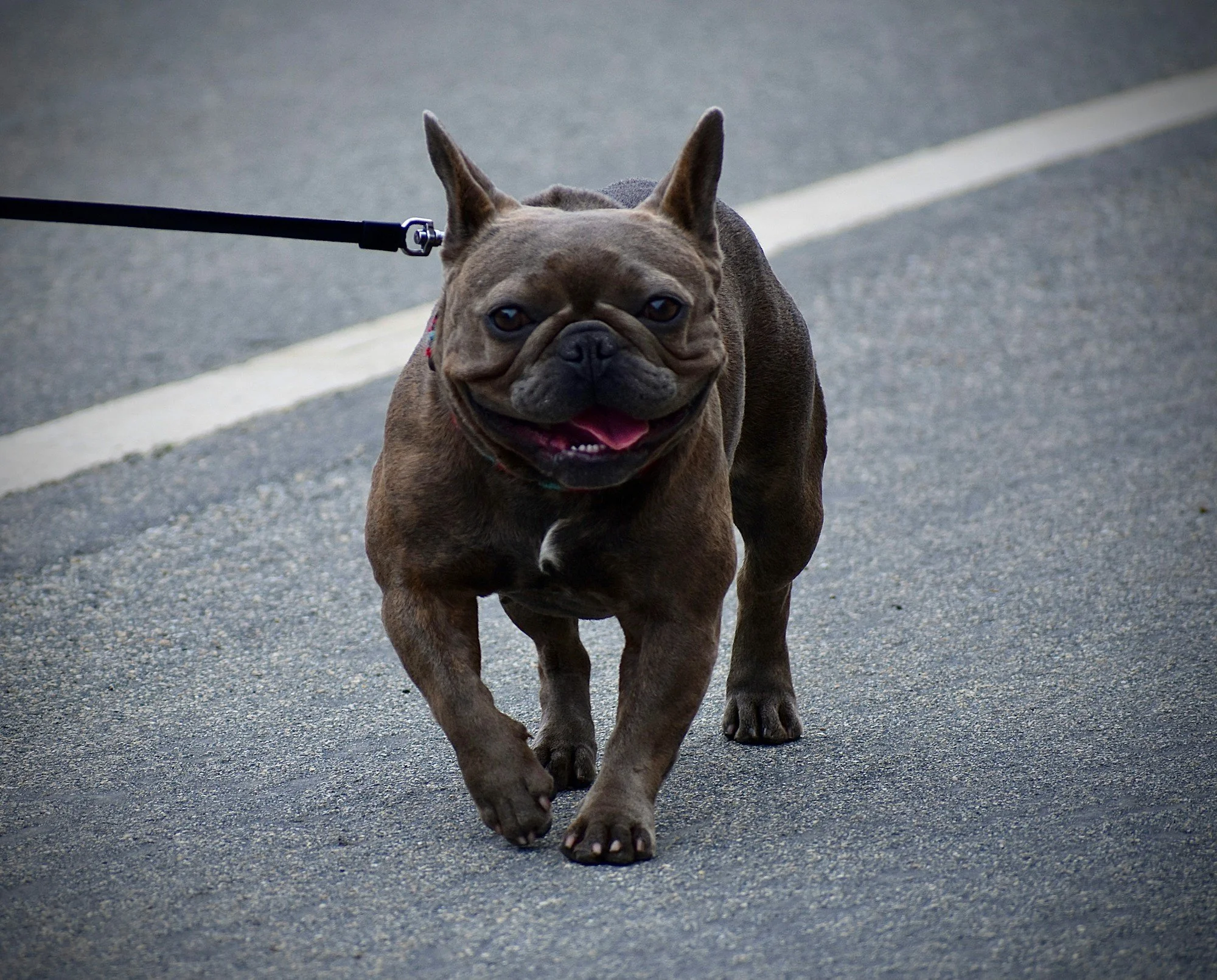
Easy breathing on a walk starts with good structure, and a harness keeps pressure off the neck and windpipe.
Brachycephalic obstructive airway syndrome, or BOAS, is the most talked-about health issue in French Bulldogs, and for good reason. It affects how a dog breathes, plays, sleeps and handles the heat. The good news is that research from the University of Cambridge and the University of Zurich gives breeders clear, measurable traits to select for. Here is what BOAS is, the signs every owner should know, and how we use the science to choose every dam and sire at North Carolina Frenchies.
What Is BOAS?
"Brachycephalic" means short-headed. In flat-faced breeds, the soft tissues of the nose and throat do not always shrink to match the shortened skull, which can narrow the airway. BOAS usually involves a combination of:
Stenotic nares — narrow, pinched nostrils.
An elongated soft palate — extra tissue at the back of the throat.
Everted laryngeal saccules — small pockets in the larynx pulled into the airway.
A narrow trachea — a windpipe smaller than normal.
Signs of BOAS Every Owner Should Know
Loud breathing, snorting or snoring while awake and at rest
Tiring quickly on walks or during play
Struggling in warm or humid weather
Gagging, retching or regurgitating food
Sleeping sitting up or with the chin propped up
In severe cases, blue gums or collapse, which is an emergency
Occasional snoring during deep sleep can be normal, but noisy breathing when a dog is awake and relaxed is not something to ignore.
What the Research Says
Open Nostrils Matter Most
A 2017 University of Cambridge study published in PLoS ONE measured 604 dogs, including 214 French Bulldogs. In Frenchies, BOAS was linked to narrowed nostrils, a thicker neck relative to the chest and a relatively shorter neck. Body condition alone was not a significant factor for Frenchies, which means structure matters more than many people assume.
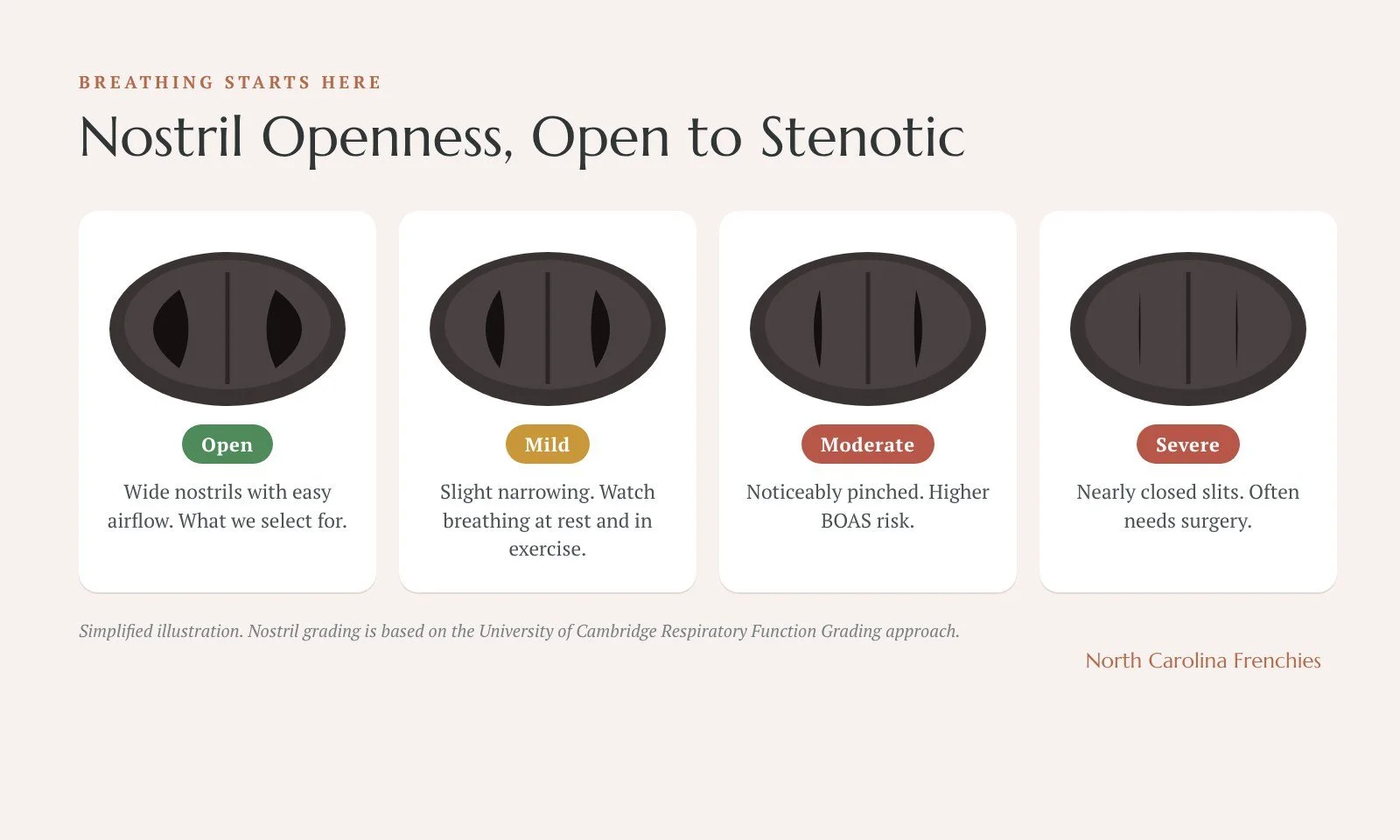
Nostril shape is one of the strongest predictors of how well a French Bulldog breathes.
Exercise Testing Is the Most Reliable Screen
A 2025 University of Zurich study in Frontiers in Veterinary Science evaluated 84 French Bulldogs and found that a trotting exercise test was the most reliable way to grade BOAS, and the authors recommend it for selecting breeding dogs. Narrowed nostrils were again the strongest anatomical predictor, while simple head and skull measurements were not reliable on their own.
Why It Matters for the Breed
A 2021 Royal Veterinary College study comparing 2,781 French Bulldogs with nearly 22,000 other dogs found Frenchies were about 42 times more likely to have narrowed nostrils and 31 times more likely to have BOAS. Those numbers are exactly why responsible breeding decisions matter so much.
How We Select for Better Breathing
Open nostrils. We look for wide, open nostrils in every dam and sire. Pinched nostrils are a deal-breaker.
Neck and body proportions. Following the Cambridge findings, we favor dogs with good neck length and proportion.
Exercise and recovery. We watch how our dogs move, play and recover after activity. Quiet breathing and a quick recovery matter.
Lean condition. Our breeding dogs are kept fit and trim.
Full health testing. Every dam and sire completes OFA evaluations, including the trachea, plus DNA testing.
No exceptions. A dog that shows signs of BOAS is never bred, regardless of color or pedigree.
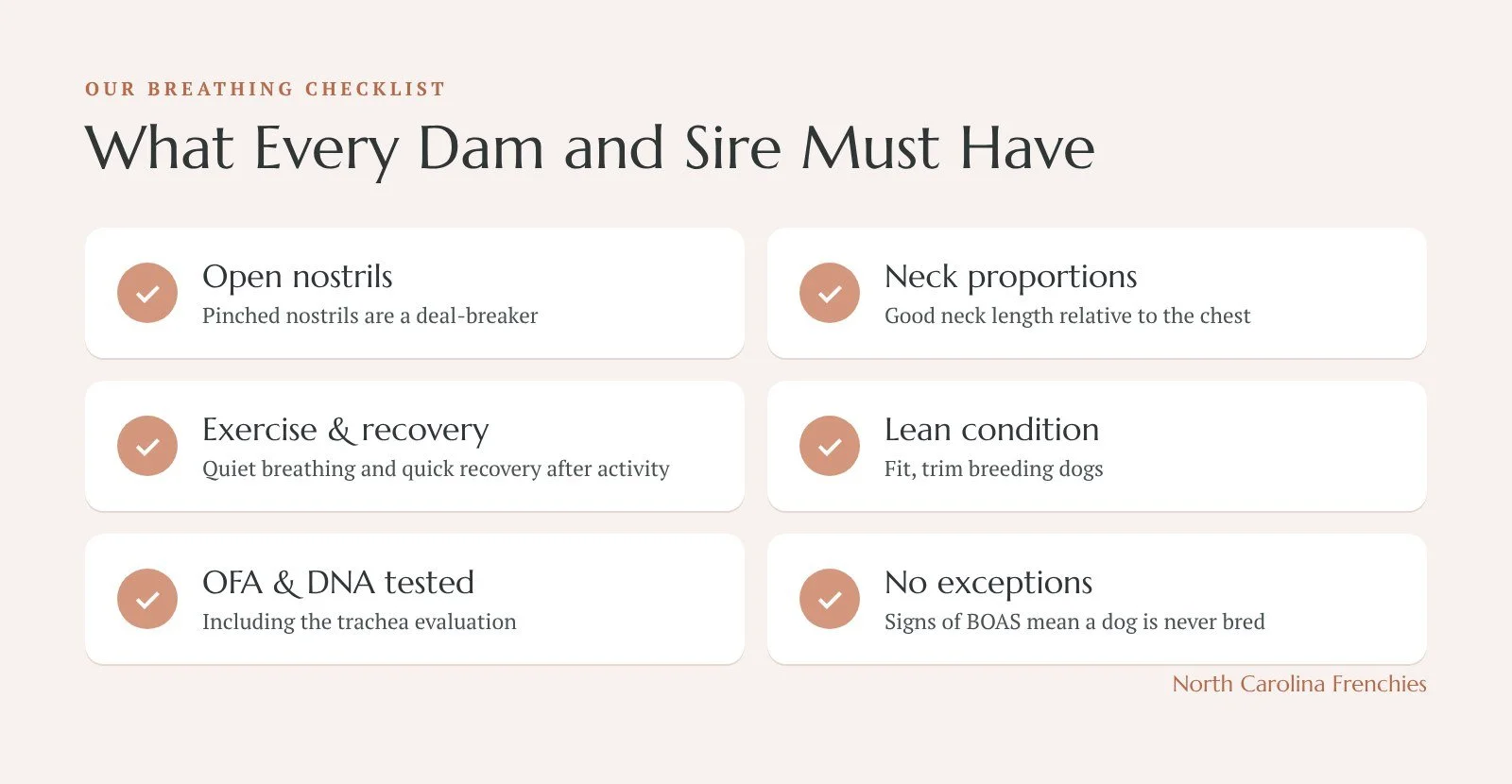
Our breathing checklist for every dam and sire in our program.
Caring for Your Frenchie's Airway at Home
Keep your Frenchie lean. Extra weight makes every breath harder.
Use a harness, not a collar, to keep pressure off the neck and windpipe.
Respect the heat. North Carolina summers are tough on flat-faced dogs. Walk early or late, offer shade and water, and never leave your dog in a car.
Learn the warning signs above and call your vet if breathing changes.
Schedule regular vet checks. For dogs that do struggle, surgery to widen the nostrils or shorten the soft palate can make a real difference.
We send every puppy home with a 1-year health guarantee, 30 days of Trupanion pet insurance and lifetime breeder support, because breathing well is a lifelong commitment. Start your puppy application →
Frequently Asked Questions
Do All French Bulldogs Have BOAS?
No. BOAS ranges from mild to severe, and many Frenchies breathe comfortably throughout their lives. Breeding choices, especially nostril shape and overall structure, play a big role.
Can BOAS Be Fixed with Surgery?
Surgery can significantly improve breathing in affected dogs, but prevention through careful breeding is always better than correction.
Is Snoring Normal in French Bulldogs?
Light snoring during deep sleep is common. Loud, labored breathing while awake and resting is not, and it is worth discussing with your veterinarian.
Does Coat Color Affect BOAS?
There is no evidence that coat color affects BOAS. Structure, especially the nostrils and neck, is what matters. Read more in our French Bulldog color guide.
Meet Our Next Litters
Every dam and sire in our program is chosen with breathing in mind. See our upcoming litters on our Available Puppies page, learn what our health testing includes, or submit a puppy application to join the waitlist.
